

Full Service
Plans
Comprehensive roadmap execution from infrastructure to identity.
Explore PlansCRM, Sales & Marketing
From single-brand automation to a multi-brand marketing system.
We turned a basic content generator into a full multi-brand marketing engine spanning media, ads, video, comments, lead sourcing, and localization.
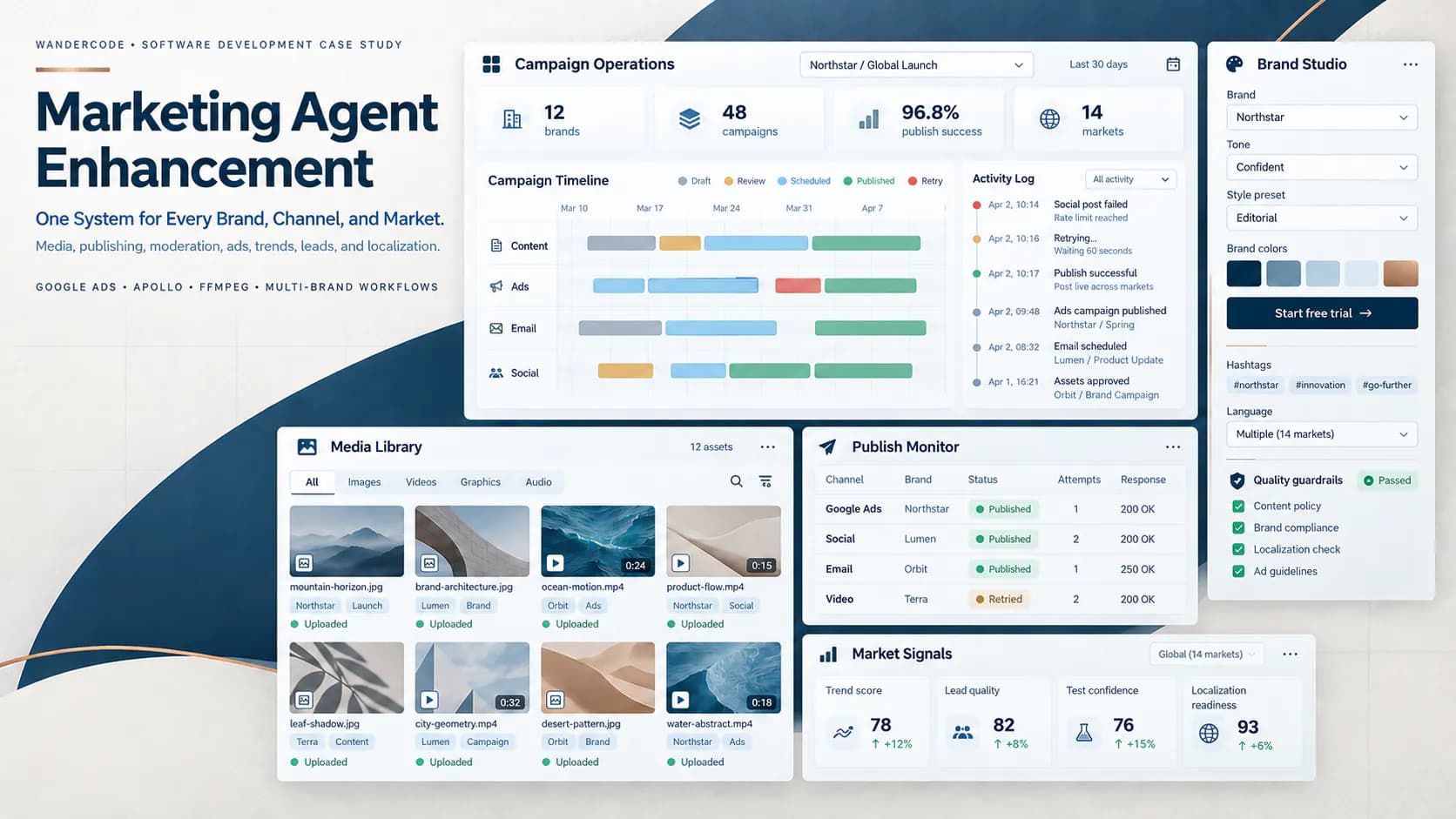
This project expanded an existing generation, publishing and campaign-scheduling foundation into a much broader multi-brand marketing system. It added media management, brand style controls, comment automation, publishing reliability, Google Ads support, video editing, trend adaptation, compliant lead sourcing, market testing and localisation. It serves agencies and marketing teams running several brands at once. Each brand has to stay on-message, compliant and visually consistent.
Media workflows were never properly productised. There wasn't a dependable way to upload, validate, tag, store and reuse marketing assets across brands and campaigns. Brand consistency was hard to enforce too. Tone, style, hashtags, calls to action, logos and brand colours weren't captured or persisted alongside generated content. Automated comment replies risked being unsafe or noisy. No moderation, rate limits, spam controls or safe-response modes protected each brand's voice. The publishing pipeline was fragile. It lacked standardised retries, error handling, campaign-to-post mapping, brand routing and any visibility into why something failed. There was no Google Ads foundation at all. That left the team without account setup, campaign creation, keyword targeting, budgets, conversion tracking or link conventions. Video options were limited with no template-based assembly for overlays, trims, transitions or brand colours. Content reacted slowly to market trends because nothing refreshed trend inputs or adapted them to each brand. Lead sourcing carried compliance and data-quality risk. There were no licensed sources, suppression lists, opt-out handling or deliverability checks. And global campaigns were blocked entirely by missing localisation, cultural relevance checks and geo-specific enrichment.
We delivered the enhancement across nine coordinated workstreams. A media library now handles upload, listing, tagging and brand and campaign association. It sits on a proper storage strategy with asset validation for file type, size and metadata. Tone and style controls were wired directly into content generation and persisted to published posts. That came with style presets, multiple styles per request, hashtag and call-to-action storage and quality guardrails for banned phrases, length and platform limits. Comment automation gained rules driven by keywords, sentiment, urgency and time windows. It also gained per-brand safe response modes, spam controls, rate limits, a moderation queue and an approve/reject workflow backed by a full audit log. Publishing was standardised with retries, error handling, campaign-to-post mapping, brand routing and observability covering logs, failure reasons and platform responses. We built a Google Ads foundation covering authentication, account selection, campaign and ad creation, keyword targeting, budgets, conversion hooks and tracking conventions. Template-based video assembly added text overlays, logos, brand colours, trimming and transitions feeding straight into the publishing library. Trend data now refreshes on a schedule with style packs and an adapt-to-brand workflow. Prospect list building draws only on permitted sources with normalisation, deduplication, enrichment, deliverability checks, suppression lists and opt-out handling. Multi-language generation and a cultural relevance workflow made the platform ready for global campaigns.
Our role was to turn a working single-brand foundation into something that could carry many brands safely. That's mostly a question of discipline rather than features. We started with discovery and architecture planning across platforms, ads, media workflows, brands, workspaces, account tokens, ownership, permissions, compliance and data retention. The multi-brand model was decided before anything was built on top of it. Compliance was a hard constraint in the lead-sourcing work. Sourcing was limited to official APIs and licensed data with mandatory source tagging, suppression lists and opt-out handling. We did not just do whatever produced the most contacts. We also managed scope deliberately. Advanced editing and deep trend automation were separated out as possible extensions beyond the core delivery window so the main scope stayed achievable.
Platform: existing generation, publishing and campaign scheduling foundation. Media: media library APIs, signed URL or public access storage, ffmpeg. Integrations: Google Ads API, Apollo, Google Places, Yelp Fusion. Content and publishing: social post models, campaign-to-post mapping, publish logs, retries. Compliance: source tagging, suppression lists, opt-out handling, moderation queue, audit log.
Marketing teams now upload, organise and reuse brand and campaign assets from one media library instead of recreating media for each post. Each generated piece carries consistent brand identity through persisted tone, style presets, hashtags, calls to action, logos and brand colours. Comment engagement runs safely at scale with rules, moderation, rate limits and audit trails protecting each brand. Publishing is far more reliable thanks to standardised flows, retries and clear failure reporting. Issues are easy to trace now instead of mysterious. The team can plan and run paid search with targeting, budgets and conversion tracking in place. Content variety expanded through template-based video editing feeding straight into publishing. Campaigns stay current as refreshed trend inputs adapt to each brand with a feedback loop. Lead sourcing is higher quality and more defensible. It draws on licensed sources with dedupe, enrichment, deliverability checks and opt-out handling. New ideas can be validated before launch through market research and survey workflows. And the platform is genuinely ready for global multi-brand operation.
Project at a Glance
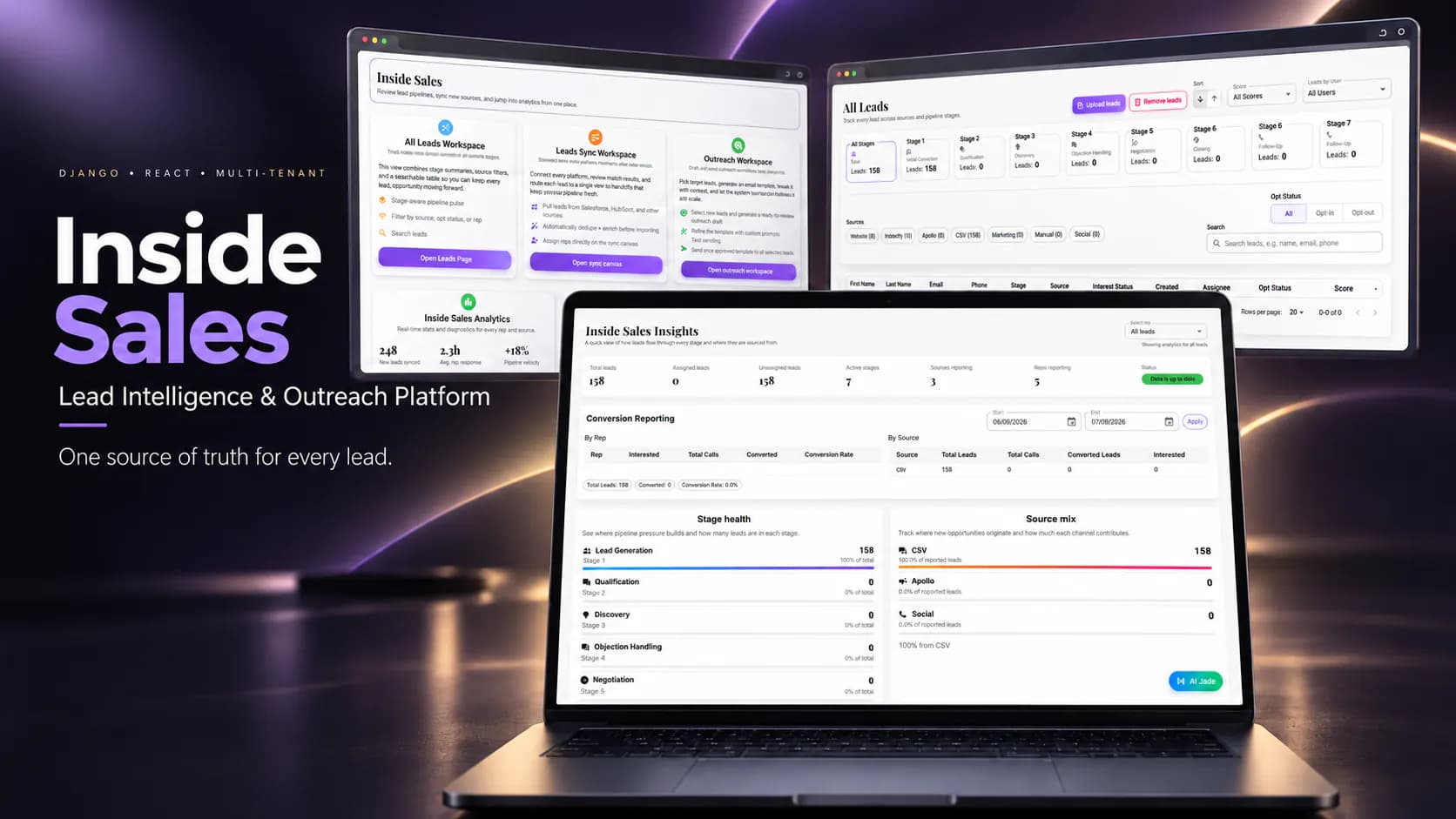
A unified inside-sales CRM that turns scattered, demo-grade lead data into a secure, deduplicated, AI-coached pipeline from intake to conversion.
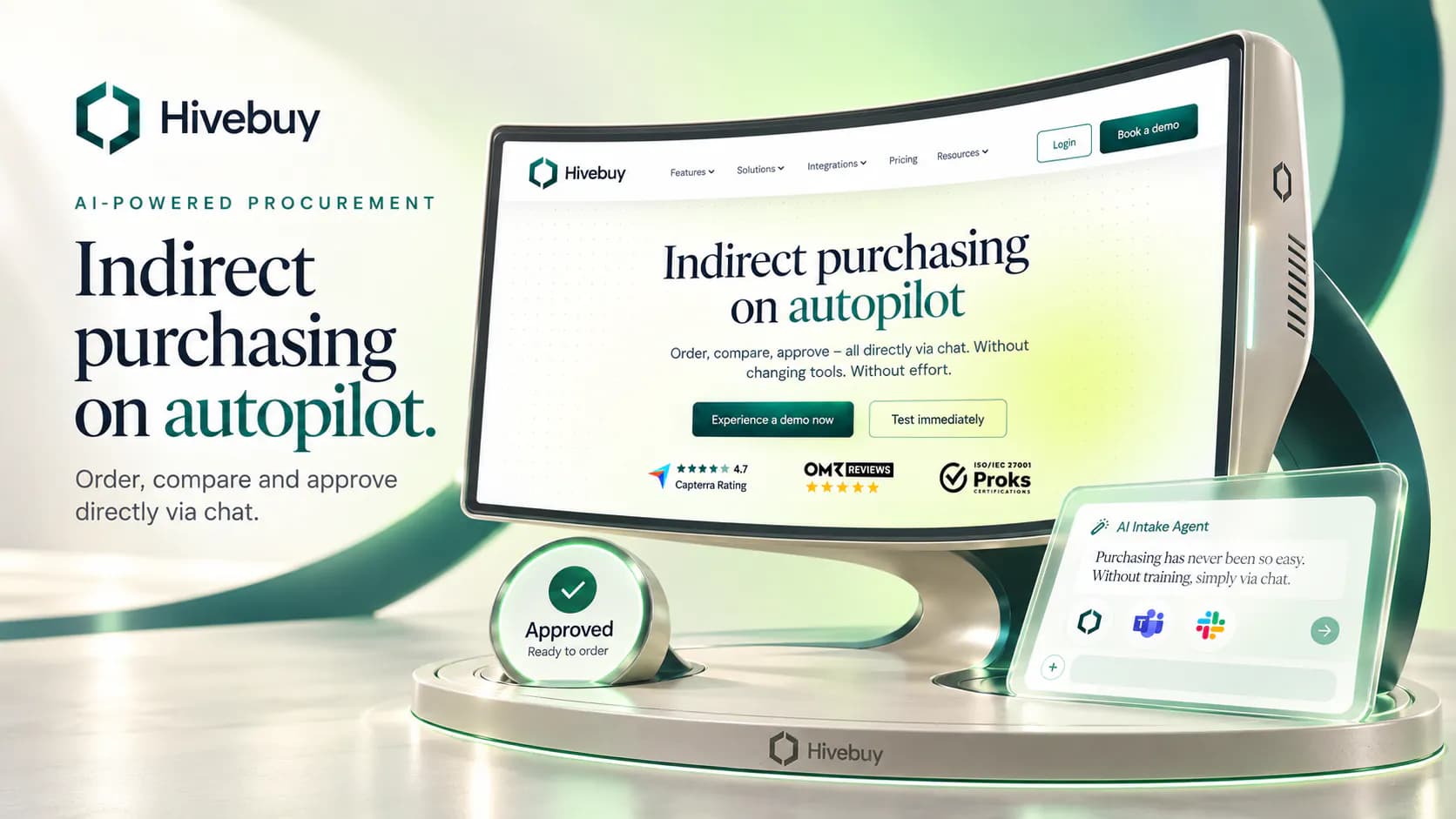
Hivebuy streamlines procurement workflows from request through approval, bringing clarity and efficiency to every purchasing decision.
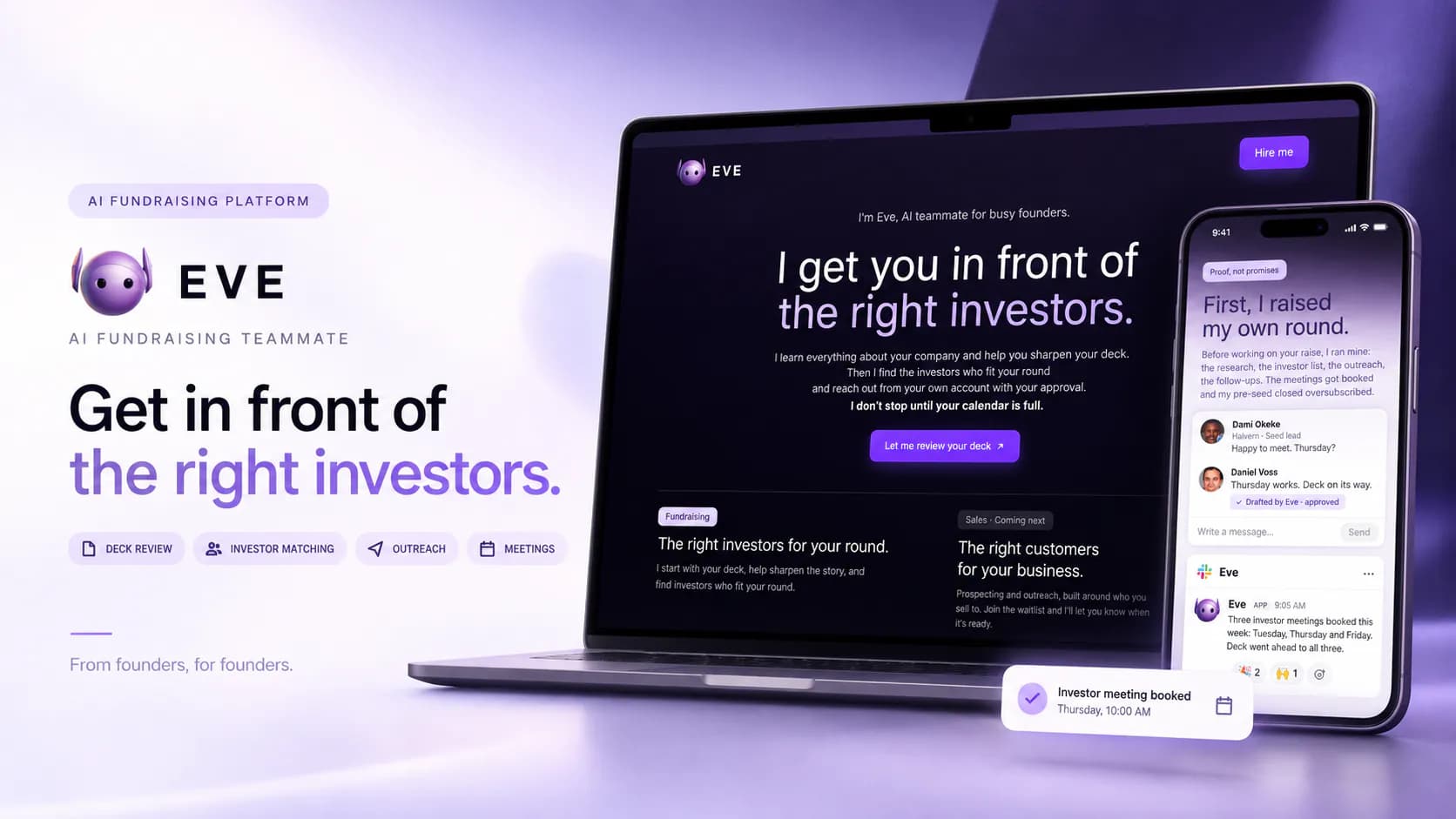
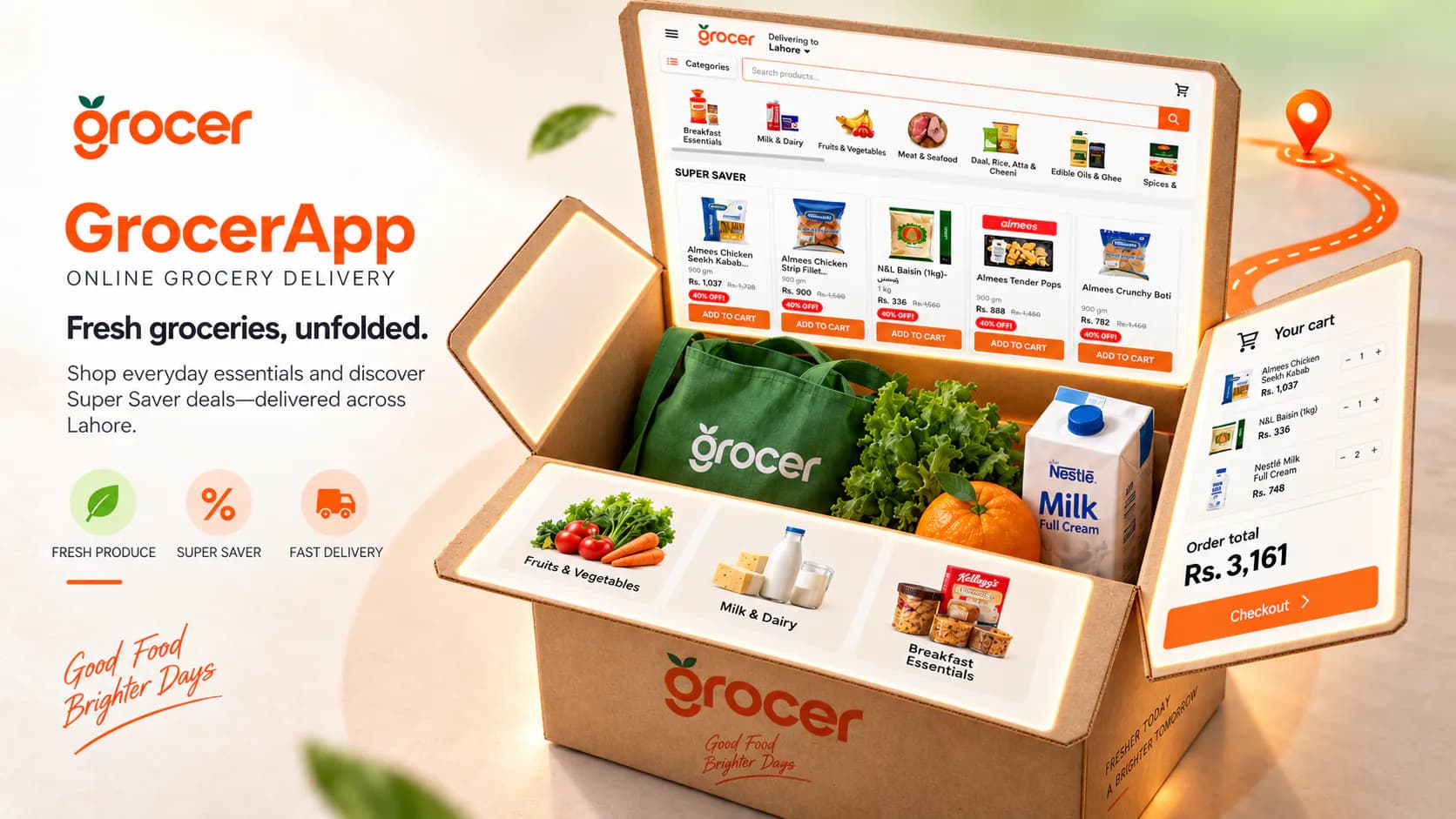
GrocerApp delivers groceries, produce, and 5000+ products at competitive prices with fast, reliable fulfilment.