

Full Service
Plans
Comprehensive roadmap execution from infrastructure to identity.
Explore PlansAI & Automation
Market data, a trained model and an explanation you can actually read.
MochiTrade is a social trading hub that blends AI-powered insights, real-time charts, and a collaborative community so investors trade smarter together.
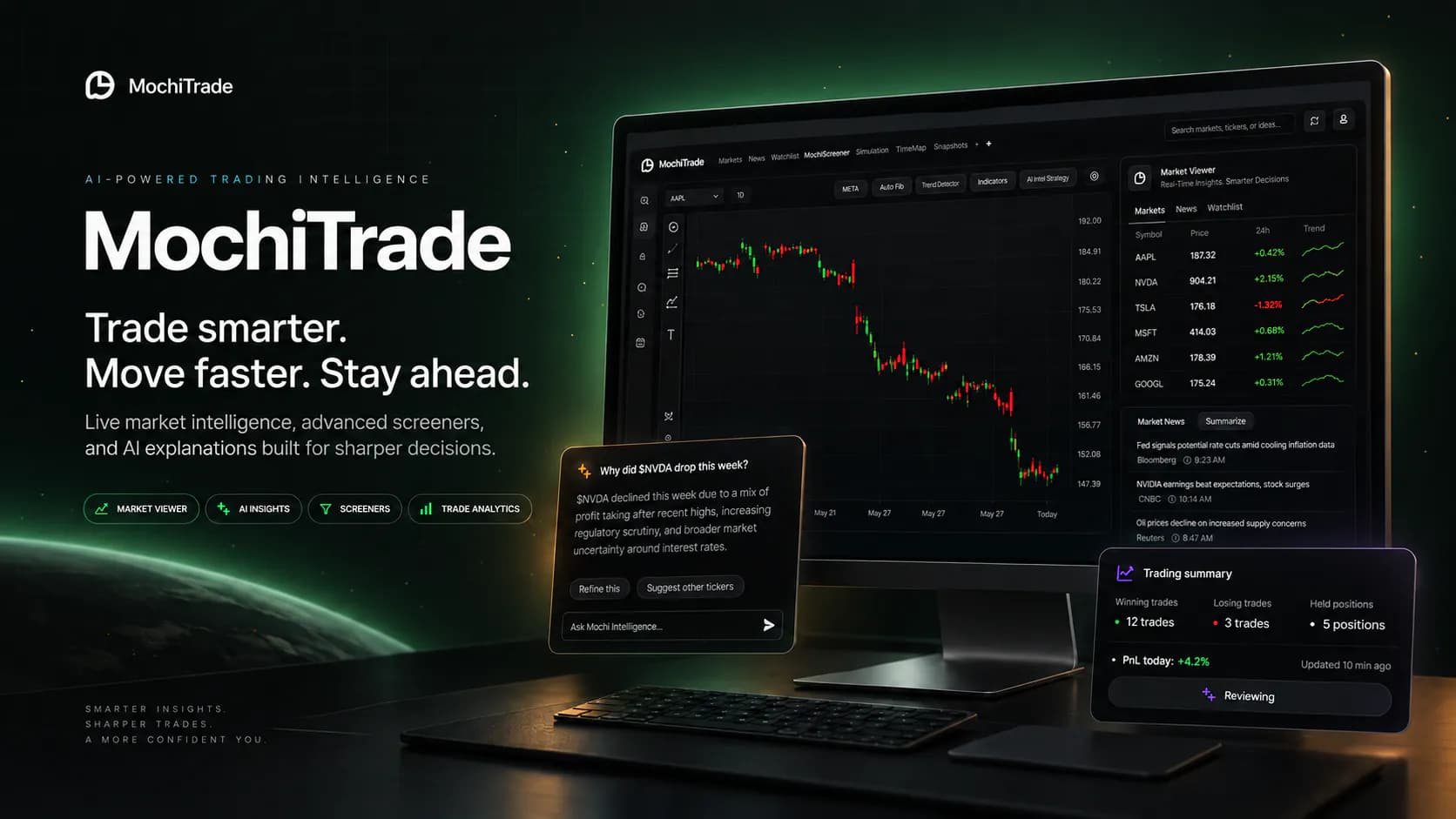
MochiTrade is an AI-powered trading and market analysis platform. It brings live market data, machine learning forecasting and language-model explanation together in one system. It streams real-time pricing and runs a custom-trained model for stock trend prediction. A set of AI agents analyse markets, gauge sentiment and interpret conversation. All of it is then translated into plain language a person can read without a quantitative finance background. It serves retail traders and investors who want the analytical depth normally reserved for institutional desks, presented in a form they can act on.
Retail traders face a widening gap between the data available to them and their ability to use it. Market data is abundant and largely free. But raw price feeds tell you what happened rather than what it means. Professional desks close that gap with quantitative models and analyst teams. Retail traders are left with charts and instinct. Three specific problems make this hard to solve well. The first is fragmentation. Market data sits across many sources. Each has its own coverage, format and rate limits. No single source gives a complete picture. Stitching several together is a real engineering task. The second is latency. A platform that refreshes on a page reload is describing the past. Any system claiming to support live decisions has to push data as it arrives rather than wait to be asked. The third is interpretation and it gets ignored most often. A model that outputs a probability is useless to someone who cannot judge whether to trust it. Most tools in this space either overwhelm the user with indicators or collapse the lot into a buy/sell signal that explains nothing. That leaves the user dependent on a system they can't evaluate. The harder and more valuable problem is making sophisticated analysis legible.
The platform was built around a FastAPI backend with real-time WebSocket data pipelines. Market data is pushed to the client as it arrives rather than polled. FastAPI's asynchronous model suits this well. A single service can handle many concurrent streaming connections alongside standard request traffic. Data is drawn from three complementary sources: yfinance, Alpha Vantage and FinancialModelingPrep. They sit behind a unified pipeline so coverage gaps, rate limits and format differences in any one source do not degrade the platform as a whole. On top of that data sits a custom LSTM model trained for stock trend prediction. Long short-term memory networks are built for exactly this shape of problem. Sequential data where what happened over preceding periods carries information about what comes next. Around the model runs a set of AI agents. Each has a distinct analytical job: market analysis, sentiment analysis and dialogue analysis. Different signal types get purpose-built components rather than one general model asked to do it all. OpenAI integration then converts the combined output into plain-language market explanations. That is what makes the rest usable. The user reads why the system reached a conclusion and not just what it concluded.
The role on this project was Python, AI and ML engineer. That covered the backend, the model and the AI layer. Several decisions shaped the result. On architecture FastAPI with WebSockets was chosen over a conventional request-response backend. A trading platform that only updates when asked can't support live decisions. The asynchronous model also keeps many concurrent streaming connections affordable. On data the choice to integrate three sources rather than one was a deliberate cost. More integration work upfront. But no single point of failure and materially better coverage. Each source has different strengths and limits. On modelling an LSTM was selected because market data is inherently sequential. The architecture is designed to carry information across time steps. Simpler regressors discard that. On the AI layer the work was split across separate agents for market, sentiment and dialogue analysis. Routing all of it through one general-purpose model would have left each component harder to tune and harder to evaluate on its own. The most consequential decision was treating explanation as core functionality rather than presentation. OpenAI-generated plain-language output changed the product from a system that issues predictions into one a user can interrogate and form a judgement about. That's the difference between a tool someone relies on and one they blindly follow.
Backend: Python, FastAPI, asynchronous request handling and WebSocket connections for real-time streaming. Machine learning: custom-trained LSTM neural network for stock trend prediction plus a model training and evaluation pipeline. AI and generative layer: OpenAI API for natural-language market explanation, LangChain for agent orchestration and purpose-built agents for market analysis, sentiment analysis and dialogue analysis. Market data: yfinance, Alpha Vantage and FinancialModelingPrep APIs behind a unified data pipeline. Engineering: data pipeline design and Git version control.
The platform delivers real-time market data, trained-model forecasting and language-model explanation as one working system. That is a meaningfully harder integration problem than any of the three components alone. The WebSocket pipeline means users see market movement as it happens rather than on refresh. The multi-source data layer means coverage gaps or rate limiting at one source no longer degrade the platform. The custom LSTM applies a model architecture suited to sequential market data rather than a generic off-the-shelf predictor. The separated agent design keeps market, sentiment and dialogue analysis independently tunable and testable as the platform develops. The plain-language explanation layer closes the gap that limits most retail trading tools. Users can read the reasoning behind an output and judge it for themselves rather than accepting or rejecting an unexplained signal. The engagement shows end-to-end capability across real-time backend engineering, custom model training and applied generative AI in a single production system.
Project at a Glance
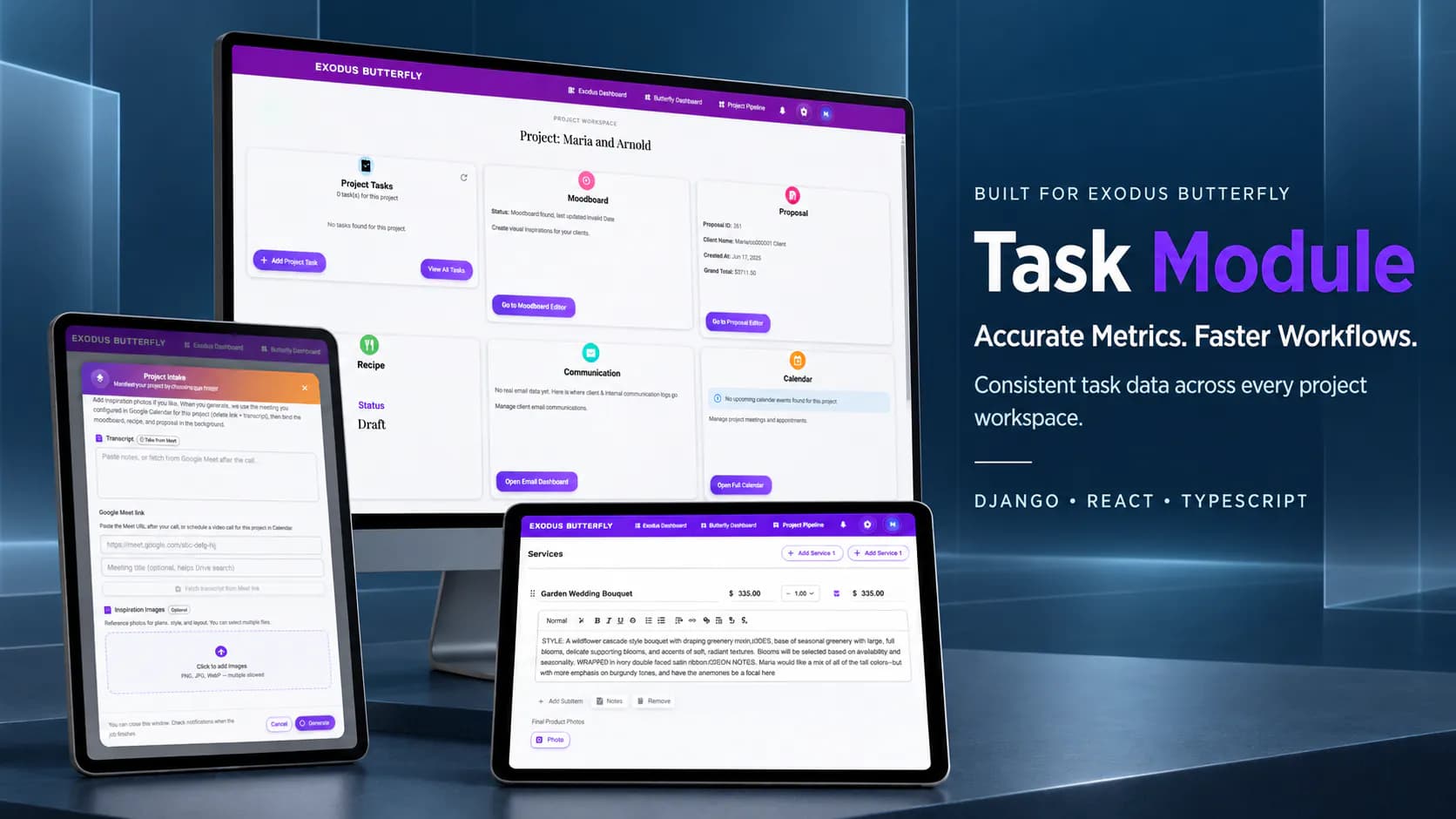
We turned a slow, fragile AI assistant into a fast, secure, multi-tenant platform that navigates plugins, orchestrates cross-plugin workflows, and generates creative drafts from images and transcripts.
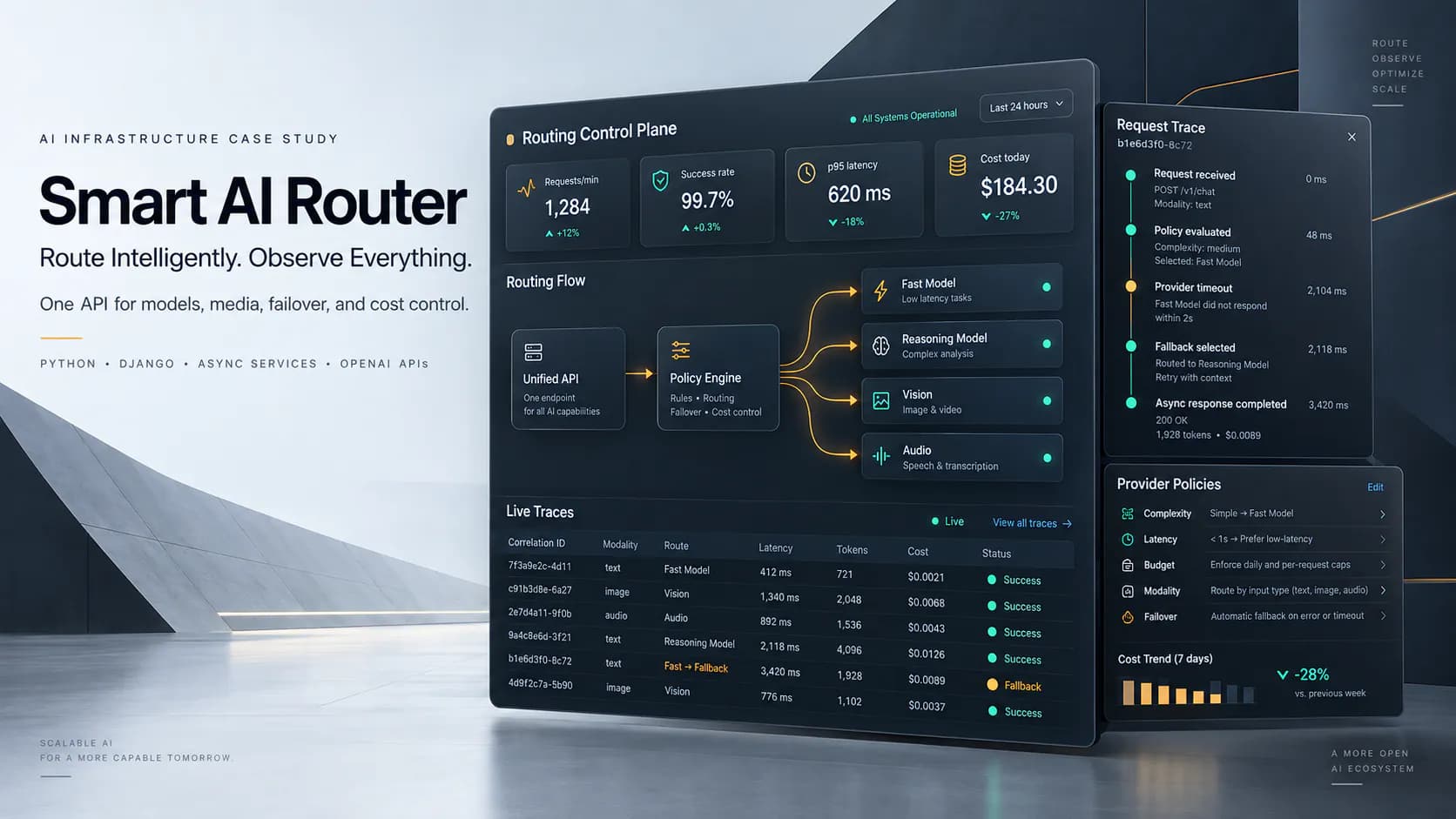
One intelligent gateway that routes every AI request to the right provider, logs it end to end, and keeps cost and latency under control.
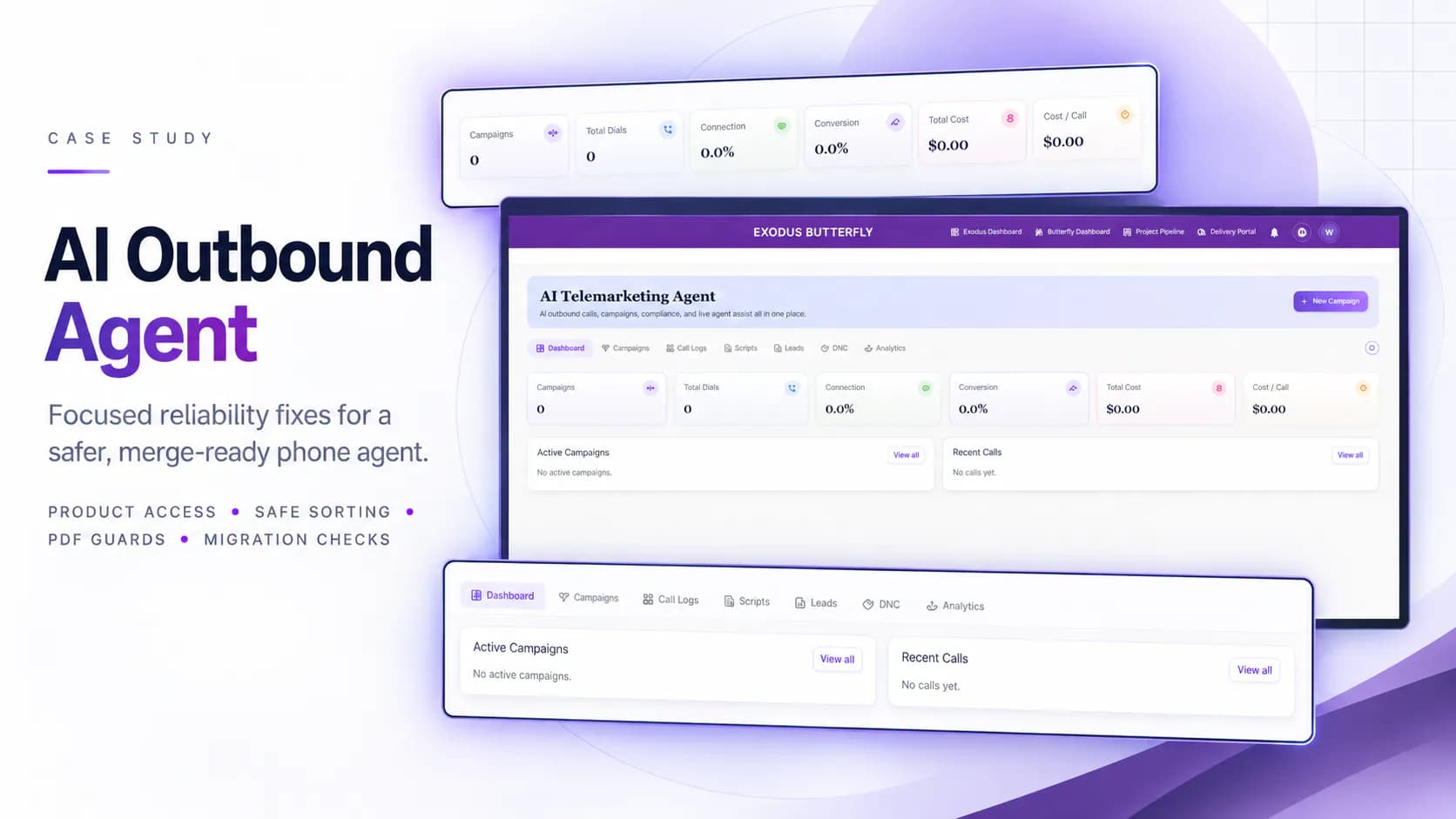
A reusable AI voice-calling engine that lets sales, marketing, and recruiting place compliant, natural-sounding outbound calls and turn every conversation into structured CRM data.
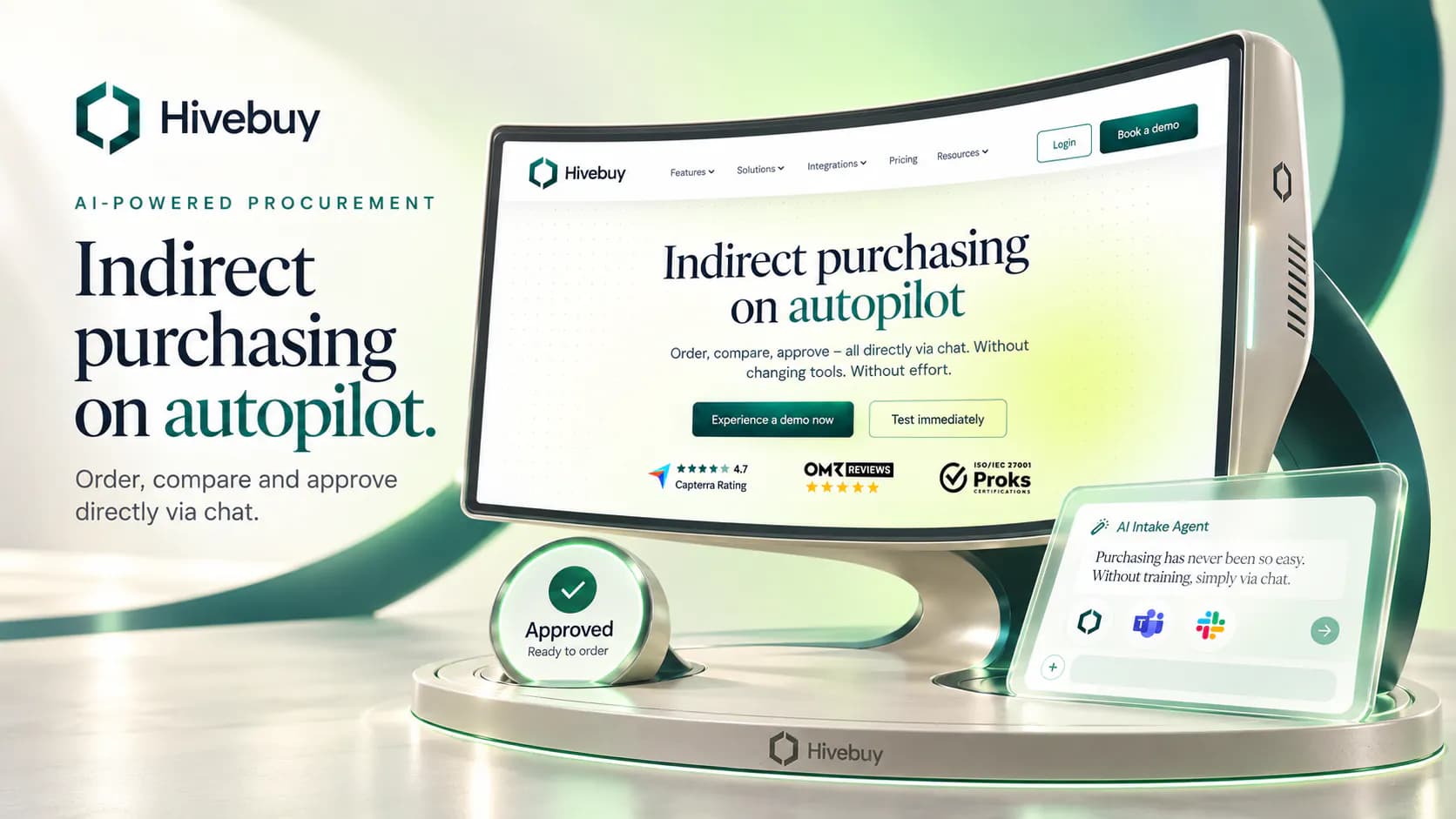
Hivebuy streamlines procurement workflows from request through approval, bringing clarity and efficiency to every purchasing decision.