

Full Service
Plans
Comprehensive roadmap execution from infrastructure to identity.
Explore PlansIndustry Solutions
Win more grants with less manual chasing.
We turned a fragile grants prototype into a hardened, AI-assisted platform that researches past winners, drafts applications, and produces live-metric funder reports.
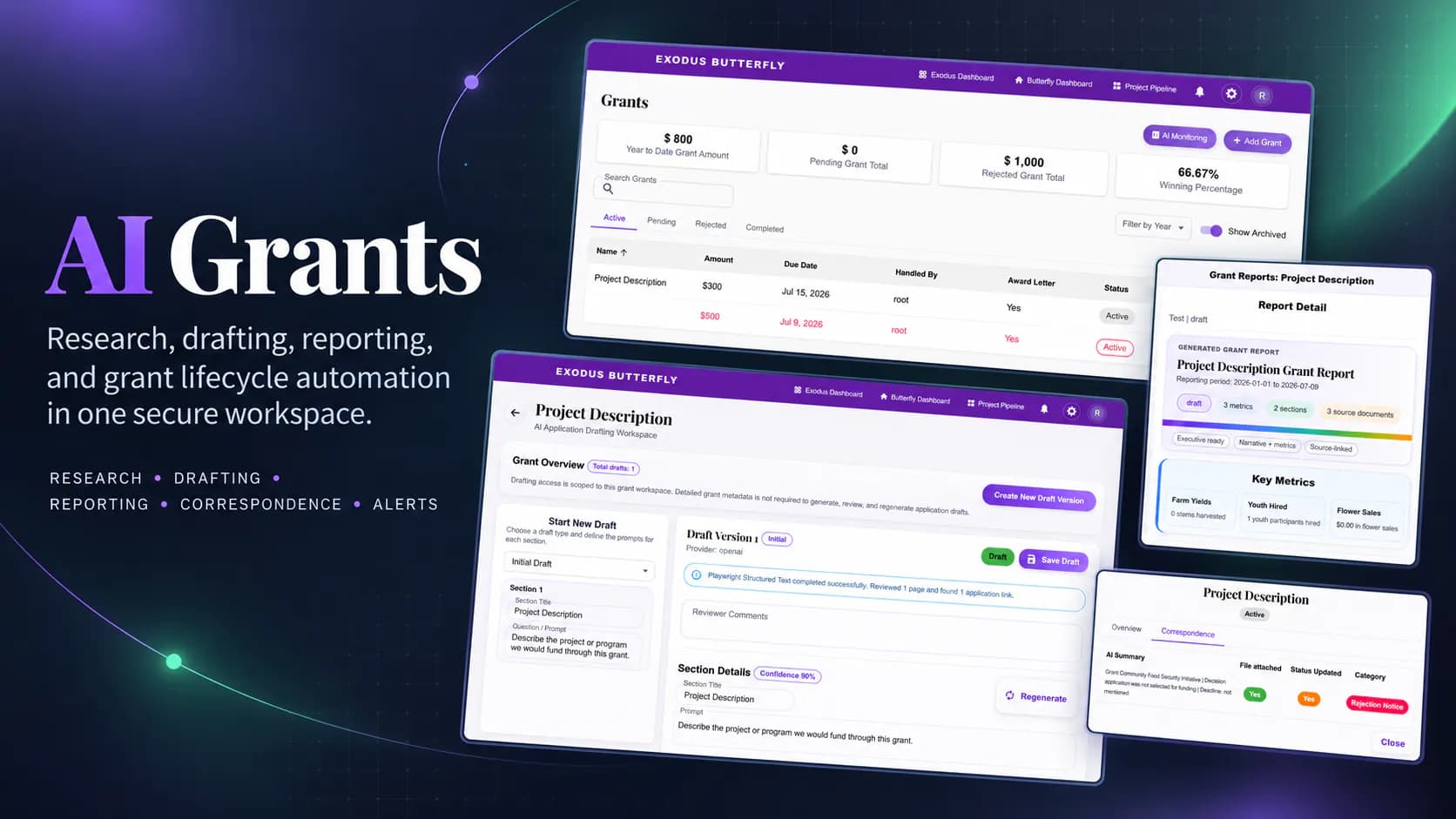
Grants AI manages the full grant lifecycle in one place. It creates grants, organises documents, researches past winners, drafts applications, generates reports with live programme metrics and tracks each email, deadline and missing award letter automatically. It serves nonprofits and grant teams who run all this across folders, spreadsheets and inboxes today. They lose time and opportunities to the admin work around applications rather than the applications themselves.
The existing grants implementation could not be safely shipped. It carried a backlog of pre-merge blockers around permissions, tenant schema context, AI stubs and broken client imports. Access control gaps and incorrect schema handling created a real risk that one organisation's grant data could show up in another's. A vector-extension database migration sat in the wrong place and threatened to disrupt other tenants sharing the same cluster. On the AI side research could silently accept ungrounded past-winner results. That quietly fills a grant record with plausible but unsupported information. Arguably that's worse than returning nothing. External research pulled in URLs with no validation which exposed the system to local files and internal network targets. Drafting was one-off and disposable. There were no persisted draft records, no status tracking and no way to regenerate a single weak answer without redoing the whole application. Reporting had no safe path to live programme metrics and risked accidental writes back into upstream modules. Grant lifecycle work was untracked. No email classification, no deadline alerts, no auto-archiving and no detection of missing award letters. And valuable funder knowledge locked inside recorded webinars was never captured.
We remediated all pre-merge blockers first. That meant permissions, tenant schema context, AI stubs, the client import path and vector migration placement, plus removing an unnecessary PDF dependency. Then we built the capabilities properly. Past-winner extraction now uses structured AI output so research fills database fields reliably. Grounding verification hard-fails on unsupported results rather than silently downgrading them. URL validation rejects local files, metadata IP ranges and internal network addresses. Drafting became a persisted trackable process with a draft model, a status state machine and an AI drafting service using retrieval and prompt assembly. Per-question regeneration means a single weak answer can be rewritten without touching the rest. Reporting gained a grant report model with funder templates and a cross-plugin metrics interface. That interface reads live programme data with no write access to upstream modules. Grant lifecycle email ingestion runs through a dedicated mailbox with an email classifier, auto-archive rules, missing-award-letter flagging, deadline notification, in-app alerts and an email digest. It all shows up as a correspondence timeline on the grant page. Video and webinar ingestion generates transcripts then chunks and embeds them. Funder guidance recorded in a webinar becomes searchable context during drafting and reporting.
Our role was to make an ambitious AI feature set trustworthy enough to rely on for funding applications. A confident-sounding error has real consequences here. That shaped two decisions in particular. First we made grounding verification hard-fail. If a research result can't be supported it is rejected rather than quietly accepted with lower confidence. Unsupported data in a grant record is worse than a gap. Second we limited the reporting layer to read-only access to upstream metrics. Reporting can never accidentally write into the modules that own that data. Security work came before feature work. Tenant isolation, permission enforcement and the misplaced vector migration were all resolved before anything new was built on top. We also time-boxed the riskiest research component which was automated web browsing. A structured-text fallback was defined in advance in case it proved impractical.
Backend: Django plugin, Celery tasks, pgvector, AI vendor orchestration. Frontend: React, TypeScript. Integrations: Gmail API, YouTube, yt-dlp, Whisper/OpenAI API, Playwright, Gemini grounding. Security: Gmail OAuth, Google service account, schema context enforcement, granular grant permissions.
Grant teams can ship the platform with confidence because the pre-merge blockers and tenant-safety risks are resolved. Tenant data stays isolated with corrected schema handling and vector migrations moved onto a cluster-safe path. Past-winner research lands as reliable structured data rather than unverified free text. Each result is grounded and verifiable and unsupported outputs fail fast instead of slipping into an application. External research is safer by design and unsafe or internal URLs get rejected before they can be followed. Drafters work from persisted records with status tracking. They can regenerate any single answer without redoing the whole application. Drafting isn't a one-shot gamble any more. It's an iterative process. Reports pull live programme metrics through a read-only interface which keeps upstream modules protected. Grant lifecycle management is automated so correspondence, deadlines, alerts, missing award letters and archiving are tracked without manual chasing. And funder knowledge from videos and webinars becomes searchable context that strengthens drafting and reporting.
Project at a Glance
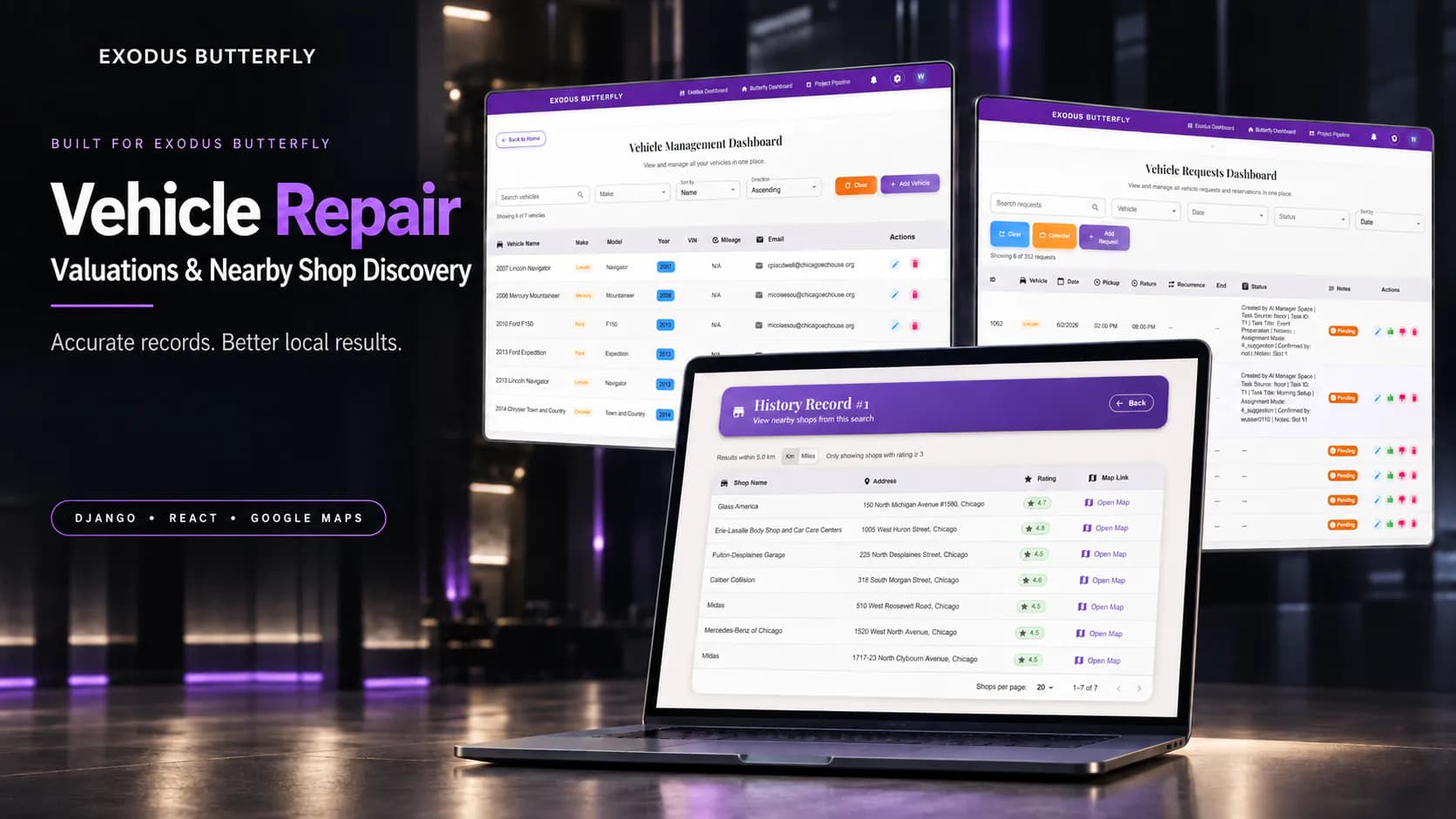
We rebuilt valuation filtering and nearby repair-shop search so saved records stay accurate, fast, and properly scoped to the right users.
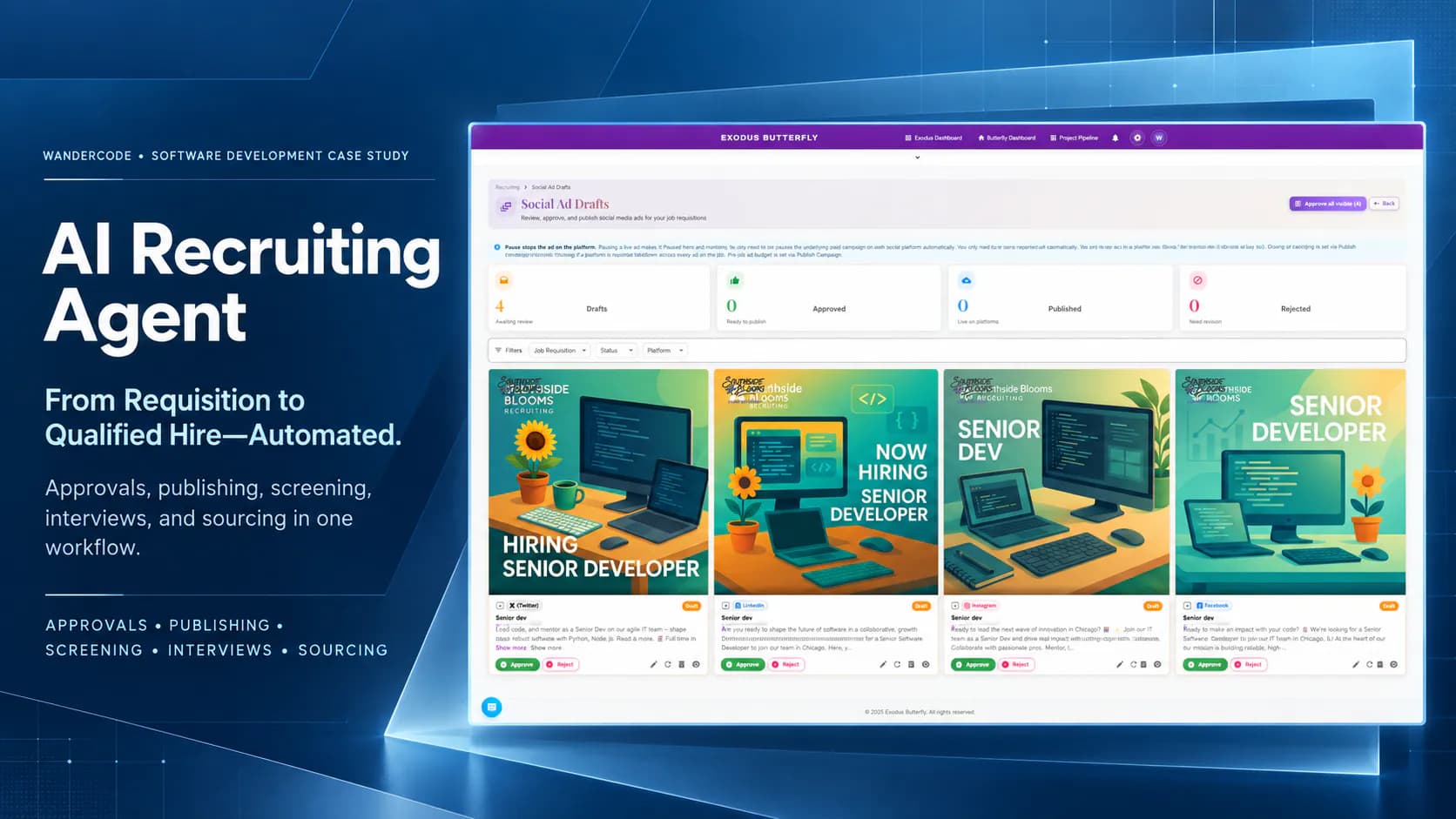
We turned a manual hiring process into an AI-driven recruiting engine that posts jobs, screens applicants, schedules interviews, and sources talent automatically.
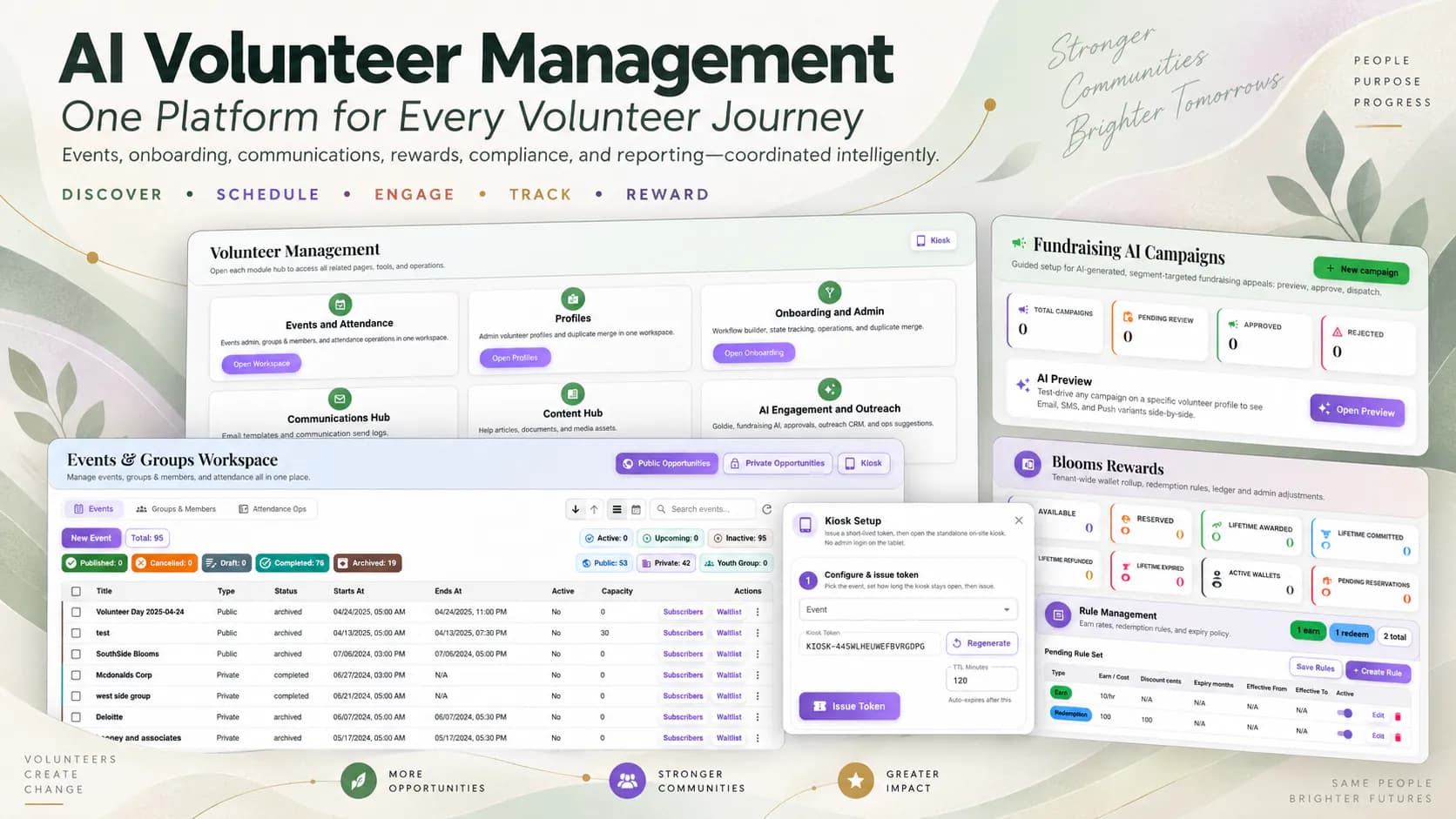
An AI-assisted volunteer platform that turns scheduling, onboarding, communication, and impact reporting into one streamlined, mobile-friendly experience.
Hivebuy streamlines procurement workflows from request through approval, bringing clarity and efficiency to every purchasing decision.